PS · XBOX · PC · SW
A game that respects your time, even with 100+ hours of game time.
GAME FACTS
TIME TO COMPLETE (AVG)
104 Hours
ACHIEVEMENTS
78
PUBLISHER
CD Projekt RED
DEVELOPER
CD Projekt
GENRES
Third-Person, Open World, Role-Playing
RELEASE YEAR
2015
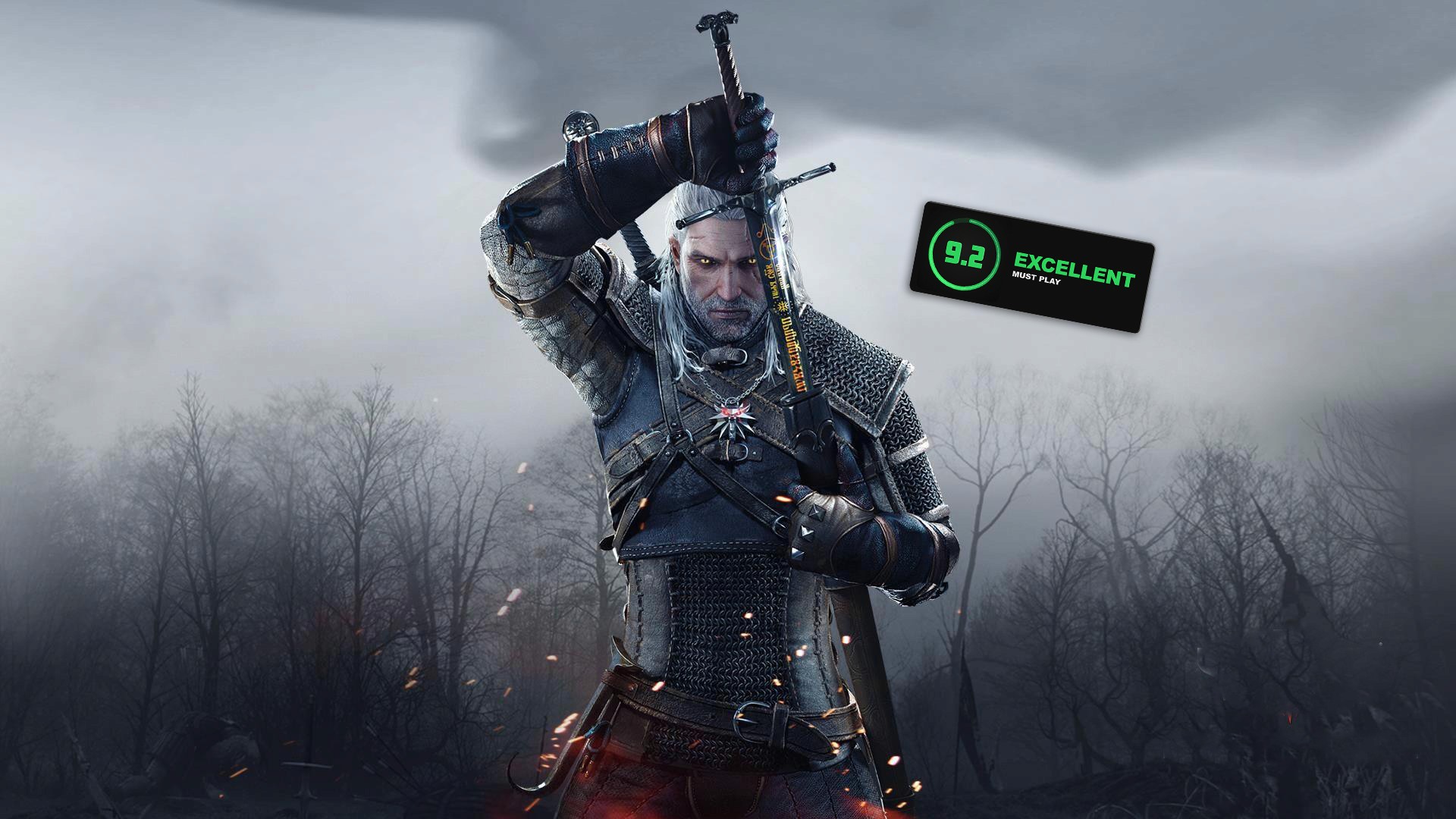
The Witcher 3: Wild Hunt — Review
Score: 9.2/10
There's a particular kind of magic that happens about fifteen hours into The Witcher 3, when you realize you've completely forgotten about the main quest. You set out from White Orchard chasing Ciri's trail, and somehow you've spent the last three hours helping a grieving farmer track down his missing wife, only to discover she left him for entirely understandable reasons and the game trusts you to sit with that complexity instead of resolving it neatly.
That's the through-line of everything CD Projekt Red does right here. This is a game that treats its "optional" content with more care than most studios give their main campaigns.
The Writing Is the Star
Side quests in most open-world games are filler go here, kill ten of that, collect three of these. The Witcher 3 inverts the entire model. Contracts that seem like standard monster-hunting jobs unfold into morally tangled stories about grief, prejudice, and the messy aftermath of war. A quest that starts with "kill the monster in the woods" might end with you realizing the monster used to be a person, and the real villain was the village that drove them there.
The Bloody Baron storyline, found early in the Velen region, is the clearest proof of what this game is capable of when it isn't rushing you toward a main objective. What looks like a simple "find my missing wife" fetch quest spirals into one of the most devastating character studies in the genre a flawed, violent man whose grief is real even as his past actions are inexcusable, and the game refuses to let you resolve his story with a clean moral verdict either way.
What makes this remarkable isn't just quality it's consistency. Dozens of hours into the game, side content still surprises. Characters you meet in a five-minute quest get remembered and referenced later. Choices made in throwaway conversations echo in ways you don't see coming until they land, sometimes hours or entire regions away from where you made them. The game rewards curiosity relentlessly: wander off the beaten path and you're far more likely to find a fully realized narrative than a copy-pasted bandit camp. Few open worlds have ever made exploration feel this narratively worthwhile — you're not hunting for loot, you're hunting for stories, and the game almost always delivers one worth finding.
A World Built to Reward Wandering
Part of what makes the writing land so well is the world it's embedded in. Velen, Novigrad, and Skellige don't feel like separate biomes stitched together for variety they feel like regions with distinct histories, economies, and problems, and the quests reflect that. Velen's war-ravaged farmland produces stories about survival and desperation; Skellige's isolated island communities produce stories about tradition, superstition, and family. The environment isn't just scenery, it's context that makes the writing hit harder.
The game's witcher senses system Geralt's ability to track scents, blood trails, and magical residue ties directly into this. It turns even simple monster contracts into small investigations, having you piece together what happened before you ever draw a sword, which reinforces the sense that every corner of the map has a story attached rather than just a marker to clear.
This extends to the game's smallest details. Notice boards in villages, gossip overheard from NPCs, journal entries found on corpses all of it builds toward the same effect: a world that feels lived-in rather than populated. Even Gwent, the game's optional card game, becomes a reason to seek out new characters and locations, turning a mechanical side-distraction into another vector for exploration. Dynamic weather and a full day-night cycle add another layer, with certain monsters behaving differently or only appearing at night, giving even repeat visits to familiar areas a reason to feel unpredictable.
Geralt, Ciri, and a Cast That Earns Its Weight
The main story, when you do return to it, benefits from the same character work. Geralt himself avoids the trap of the silent or blank-slate protagonist he has an established voice, history, and worldview, and dialogue choices let you shade that personality rather than invent one from scratch. It's a smarter approach to player agency than pure open-ended choice, because it means every line of dialogue actually sounds like it belongs to someone.
Ciri's sections, when they arrive, are a highlight rather than an interruption a rare case of a game successfully handing control to a second protagonist without deflating the momentum built around the first. Secondary characters like Yennefer, Triss, and Dandelion are given enough space to feel like people with their own agendas rather than quest-dispensers, and the game's willingness to let relationships sour, complicate, or go unresolved gives the whole story a rougher, more human texture than most fantasy epics attempt. The moral choices threaded throughout aren't sorted into obvious "good" and "evil" options either many only reveal their full consequences hours or regions later, which makes decision-making feel genuinely weighty rather than performative.
Atmosphere and Sound
The score deserves real credit too. Folk-inspired instrumentation threaded through Skellige's themes and the melancholy undertones running through Velen's music do a lot of quiet work in selling the tone of each region before a single quest is read. Combined with the weather and day-night systems mentioned above, the game creates an atmosphere that's doing as much storytelling as the scripts are.
Where It Stumbles: Combat
The friction comes when you actually have to fight. Combat in The Witcher 3 has never quite matched the ambition of everything surrounding it. Geralt's movement carries a stiffness that makes precise positioning frustrating, especially against groups, where the camera and lock-on system struggle to keep up. Sign-casting (the game's magic system) and sword work don't always mesh cleanly, and encounters can swing between too easy and oddly punishing depending on preparation rather than skill.
Mounted combat and environmental interactions knocking enemies into hazards, fighting from horseback are nice ideas on paper but rarely feel as tight or reliable as ground-based swordplay, so they end up as novelties more than viable tactics. The itemization and crafting systems layered on top add unnecessary friction too sorting through duplicate diagrams and marginally-different swords rarely feels rewarding compared to the narrative payoff of exploration elsewhere. It's the one system in the game that feels like it's competing with the writing for your attention instead of supporting it. None of this is bad enough to derail the experience it's functional, occasionally even satisfying against the right monster but it's clearly the part of the game that received the least polish relative to everything else. After the sheer craft on display in the writing, the combat can't help but feel like the weakest link holding the rest together.
Technical Performance and Longevity
Years on from release, the game has aged well, helped considerably by patches and a later next-gen update that smoothed out many of the rougher technical edges present at launch. Pop-in and framerate dips that once marred the open-world traversal are largely a non-issue now, letting the strength of the world design take center stage without fighting the hardware.
It's also worth noting the game's expansions particularly the larger of the two extend the same quality of side content into entirely new regions, arguably representing some of the best writing in the entire package. Anyone who finishes the base game and comes away impressed by its optional content owes it to themselves to continue.
The Verdict
None of the combat's shortcomings undercut what CD Projekt Red built here. The Witcher 3 remains one of the finest achievements in the genre because it understood something a lot of open-world games still miss: a massive map is worthless without something worth finding in it. The combat holds the experience back from perfection, and the crafting and mounted-combat systems built around it add friction without adding value, but the sheer density and quality of the writing especially in content most games would treat as disposable makes this one of the most rewarding worlds ever built for a player willing to wander off the path.