PS ONLY
Combat this good makes the muddled story easy to forgive Housemarque's bullet ballet is worth a go.

GAME FACTS
TIME TO COMPLETE (AVG)
22 Hours
ACHIEVEMENTS
45
PUBLISHER
Sony Interactive Entertainment
DEVELOPER
Housemarque
GENRES
Action, Adventure
RELEASE YEAR
2026
Saros — Review
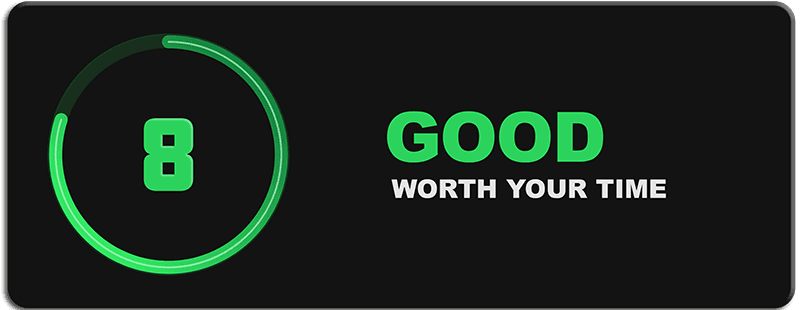
Score: 8/10
Five years after Returnal proved a small Finnish arcade specialist could carry a PlayStation first-party release, Housemarque has returned with something both bolder and, in some ways, gentler. Saros is the spiritual successor that fans wanted sharper, more accessible, and mechanically richer even if the narrative ambitions it reaches for don't quite land with the same force as its combat.
Carcosa, and the Company That Sent You There
You play Arjun Devraj, an Executor attached to Echelon IV, an expedition sent by the Soltari corporation to investigate disappearances on the planet Carcosa. The draw is Lucenite, a compound with enormous energy potential and trillions in projected revenue attached which tells you everything about the priorities of the people who sent you.
Rahul Kohli's performance as Arjun is a genuine highlight, giving the game a human centre that Returnal deliberately withheld. Housemarque has expanded the cast considerably this time, with regular interaction between crew members and, later, other expeditions entirely. The cosmic horror influences remain Lovecraft and Solaris are still detectable in the DNA now layered with explicit nods to Robert W. Chambers' The King in Yellow, from which Carcosa takes its name.
The Bullet Ballet
The combat is where this game earns its keep, and it's genuinely exceptional. Director Gregory Louden has described it as a "bullet ballet," and the phrase fits: enemy projectiles are colour-coded by response, with blue bullets absorbed into your shield and converted into power, yellow ones dodged through, and red ones parried straight back.
That colour system does enormous work. On a screen this visually dense, it lets you build reactions into muscle memory rather than parsing chaos frame by frame and once it clicks, you reach a state where retreating stops being necessary at all. Enemies die fast enough that encounters feel like a rapid sequence of combat puzzles rather than a slog against damage sponges. The momentum is extraordinary.
The DualSense implementation deserves specific mention too, joining the small handful of games this generation that actually use the controller's capabilities meaningfully rather than as a checkbox.
Boss encounters are the standout. Multi-phase, visually striking, and mechanically demanding in ways that genuinely test what you've internalized, they rank among the best in the genre.
More Accessible, Less Punishing
The biggest structural change from Returnal is how much less hostile the game is toward players who aren't already elite. Progression systems carry meaningful gains between runs, and there are risk/reward modifiers that let you push for greater damage output at the cost of experience gained or certain upgrade materials appearing at all. Death costs you less arbitrarily, and success feels less dependent on lucky drops.
Housemarque has also built in accommodations for players who simply want to see the story though you'll still need to prove yourself against the first couple of bosses before those open up. It's a thoughtful compromise: the challenge remains the point, but the door isn't bolted shut.
Whether you consider this an improvement depends on what drew you to Returnal. The brutal, unforgiving edge that made that game's victories feel monumental has been softened. What you get in return is a game far more people can actually finish.
Where It Falls Short
The narrative is the weak link, and it's a persistent one. Housemarque still leans heavily on visions, obscure text logs, and cryptic holograms rather than dramatizing its story directly, which means the plot arrives in fragments that never fully cohere. The hooks are stronger than Returnal's and the mystery is compelling in the moment, but you'll finish with more questions than answers and not always in the productive way.
More pointedly, the expanded cast doesn't achieve what the expansion was presumably for. Despite having far more characters than its predecessor, few of them stick. It's a recurring criticism across reviews and a fair one: you'll remember Arjun, and you'll struggle to name anyone else.
The Verdict
Saros is Housemarque doing what Housemarque does better than almost anyone building a combat system so responsive, legible, and satisfying that you'll keep restarting runs long after you meant to stop. The bullet ballet is a legitimate evolution of the studio's arcade heritage, the boss design is superb, and the accessibility work opens the experience to players Returnal locked out.
It's held back by storytelling that reaches for prestige-drama weight without the structure to support it, and a cast that never justifies its own size. But the loop is addictive, the craft is undeniable, and this remains one of the more distinctive things on PlayStation 5.