PS · XBOX · PC
Sharp combat and a great dog can't quite carry a world that feels half-finished.

GAME FACTS
TIME TO COMPLETE (AVG)
26 Hours
ACHIEVEMENTS
46
PUBLISHER
Private Division
DEVELOPER
Game Freak
GENRES
Action, Adventure
RELEASE YEAR
2026
Beast of Reincarnation — Review
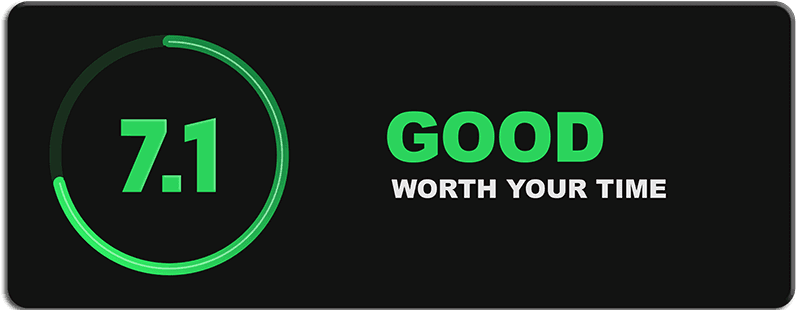
Score: 7.1/10
There's a version of Beast of Reincarnation that's a genuine triumph a studio synonymous with one franchise stepping decisively outside it and proving it had more range than anyone gave it credit for. This isn't quite that game. But it's closer than the skeptics expected, and when it works, it works well enough to make you wish Game Freak had been given the time to see the idea all the way through.
It's also a game that's split its audience straight down the middle, which is usually a more interesting outcome than universal warmth.
The Weight of Expectation
Context matters here. This is Game Freak's first major original title outside Pokémon a studio that has spent essentially its entire existence on one franchise, stepping into a genre defined by developers who've spent a decade refining it. That's an enormous swing, and it was always going to be judged against an unfair standard: not "is this good for a first attempt," but "is this good enough to sit alongside the games it's clearly learning from."
It's also worth knowing that only a portion of Game Freak's staff worked directly on this. The studio handled creative direction and project management while much of the actual development was outsourced to external partners which arguably explains a lot about the finished product. The ideas at its centre feel authored and specific; the connective tissue around them often doesn't.
One Person, One Dog
The pitch is disarmingly simple: you're Emma, an outcast in a collapsed, far-future Japan, and Koo, a blighted dog, is your only companion. That's the whole party. It's a structure that could easily have been a gimmick, and to the game's credit, it mostly isn't. Koo isn't a cosmetic sidekick he flags nearby enemies and items while you explore, and in combat you direct him through abilities covering offense, defense, and recovery. Players have consistently singled out how often he's ahead of you spotting threats before you've registered them yourself.
Crucially, you steer the pair rather than letting the companion act autonomously. That's a meaningful design distinction: Koo never becomes background noise the way most AI companions eventually do, because he genuinely can't function without your input. The trade-off is that combat demands you split attention between two characters at all times, which some players will find engaging and others will find exhausting.
More importantly, the relationship carries the game emotionally. In a world stripped of nearly everything, the bond between a girl rejected by her own society and an animal suffering from the same affliction gives the story an anchor it badly needs.
Combat That Lands More Often Than It Misses
The moment-to-moment fighting is the strongest thing here, and it's the one point almost everyone agrees on. Emma's swordplay is quick and responsive, and the parry system is the load-bearing mechanic: successful parries recover the action points you spend commanding Koo, and the game slows time while you're issuing those commands. It's a genuinely smart loop defense funds offense, and offense is a two-character coordination puzzle.
The comparisons players keep reaching for are telling. PC Gamer places it on the parry spectrum somewhere below Sekiro's brutal timing windows and closer to Stellar Blade's more forgiving ones, while Steam players have described it as a blend of Sekiro, NieR: Automata and Princess Mononoke, with time-slow command sequencing that recalls Final Fantasy VII Remake and Expedition 33. That's a lot of borrowed DNA, but the synthesis is its own thing.
Build variety runs deeper than expected too Emma has access to a bow and crossbow that can become monstrously powerful with enough skill tree investment, meaning ranged, stealthy, and aggressive playstyles are all viable rather than nominal. Spirit stones and gear layer further customization on top, and the game genuinely supports committing to a specialization rather than nudging everyone toward one optimal loadout. There's also a story mode difficulty for anyone who'd rather not engage with parry timing at all, which is a genuinely thoughtful inclusion given how central it otherwise is.
Atmosphere Is the Quiet Standout
For all the criticism of what's in the world, the world itself is frequently beautiful. The blighted forests and reclaimed ruins of a Japan four millennia removed from ours have a melancholy stillness to them, and the game's best moments are often the quiet ones cresting a rise to find greenery bursting improbably out of wasteland, or simply travelling with Koo through somewhere nothing wants to kill you for a change.
The soundtrack has drawn near-universal praise from players, and it does a lot of load-bearing work in selling the tone. Boss encounters in particular benefit the audio and creature design of the Nushi are consistently stronger than the standard enemies you'll fight far more often, which makes the gap between the game's highs and its filler feel wider than it needed to.
Where the Cracks Show
The problem is consistency, and this is where the player split gets loud. Steam's early user response sat at Mixed, with just over half of the first wave of reviews positive noticeably cooler than the critical reception, which landed at a Metascore in the low 70s with no outright negative reviews at all. That gap usually means something specific is bothering people who bought it rather than something broadly wrong with the design.
The recurring complaints are structural. Players have flagged simplistic enemy attack patterns, weak enemy variety, and exploration that doesn't reward the time you put into it. Critics who scored it lower pointed at repetitive environments, underdeveloped RPG systems, and a restrictive overall structure. The skill trees themselves have been called convoluted, and preview coverage repeatedly noted that the game explains itself poorly sparse early tutorials and a story that opens cryptically enough to leave players unsure what they're meant to be doing.
That last point deserves emphasis because it's fixable and yet actively costs the game players. The first few hours are the weakest stretch by some margin: systems arrive unexplained, the narrative withholds context aggressively, and the combat loop doesn't click until you understand why parrying matters. Plenty of the harshest early reactions read like people who bounced off before the game had shown them what it does well which is a design failure regardless of how good hour ten is.
Technically, PC has its own issues. Early Steam discussions report black bars and missing native ultrawide support, the sort of thing patches usually address but which stings at full price on day one. Performance complaints exist too, though some in the community have pushed back on those, pointing out that several negative reviews came from setups below the game's requirements, and arguing early scores tend to settle over time. Steam Deck support was listed as unverified at launch with the developer stating optimization work was ongoing.
One more genuinely divisive choice worth naming: Emma is written and performed as almost entirely devoid of emotion. It's clearly deliberate she's a character defined by what's been taken from her — but it means the game asks you to invest in a protagonist who won't meet you halfway, and not everyone will make that trade. Some players find it a haunting, well-executed characterization; others find it a wall between them and a story that's already keeping its cards close.
Who This Is Actually For
The clearest way to read the split reception is that this game is aimed at a specific player and isn't much interested in accommodating anyone else. If you enjoy parry-driven combat, don't mind a story that makes you work for it, and are drawn to the idea of a two-character tactical loop, there's a genuinely rewarding fifteen-plus hours here. If you're primarily an explorer, a loot-chaser, or someone who wants a game to explain itself clearly, the friction will outweigh the payoff.
The Verdict
Beast of Reincarnation is the sound of a studio finding its footing in unfamiliar territory. The core combat is sharp, the Emma-and-Koo dynamic gives it real heart, and the parry-to-command loop is a legitimately good idea. But the world built around that combat is thinner than it deserves repetitive spaces, undercooked enemy design, and exploration that rarely pays off and the launch-state PC issues don't help.
The mixed reception isn't a case of a hidden masterpiece being misjudged; it reflects a real divide between a strong combat system and a less consistent game surrounding it. If the Emma-and-Koo partnership is what draws you, that alone may well carry the whole experience. If you're here for narrative depth, environmental variety, or polished PC support, waiting for patches or a discount is the smarter call.
For anyone with Game Pass, though, this is an easy recommendation a flawed, interesting swing worth taking. And more than that, it's the kind of failure worth having: a studio reaching past what's safe and getting maybe seventy percent of the way there. A sequel with the same ideas and more confidence behind them could be something genuinely special.